

Stable Diffusion
advancedOpen-source image AI, maximum control, zero per-image cost.
Stable Diffusion is the leading open-source image generation model, offering unlimited, free image generation when self-hosted. Unlike cloud-based alternatives, Stable Diffusion gives businesses complete control over the model, data, and outputs, including the ability to fine-tune on proprietary datasets for brand-specific or industry-specific image generation. It powers thousands of applications, from product photography and fashion design to medical imaging and game development. PxlPeak deploys self-hosted Stable Diffusion instances, fine-tunes models on client data, and builds production-grade image generation pipelines.
$0
Per-image cost (self-hosted)
10M+
Open-source community users
100K+
Custom models on CivitAI
Key Features
Open-source with unrestricted commercial use (most model licenses)
Self-hosted deployment with zero per-image generation cost
Fine-tuning on proprietary datasets for custom styles and subjects
ControlNet, LoRA, and IP-Adapter for precise generation control
Inpainting, outpainting, and image-to-image transformation
ComfyUI and A1111 workflow builders for production pipelines
Use Cases We Implement
Generate unlimited product photography without per-image costs
Fine-tune on brand assets for perfectly on-brand visual content
Build custom image generation APIs for SaaS products
Create training data and synthetic images for machine learning
How We Implement Stable Diffusion
Assess
We analyze your business needs and how Stable Diffusion fits into your workflow.
Configure
Set up Stable Diffusion with custom settings, integrations, and data connections.
Integrate
Connect to your existing tools: CRM, helpdesk, email, and more.
Train & Launch
Train your team, document everything, and provide ongoing support.
When NOT to Use Stable Diffusion
You don't have engineering resources, self-hosting requires DevOps skills; use Midjourney or OpenAI's gpt-image models for zero-infrastructure setup.
You need images immediately (no setup time), cloud tools generate in seconds; self-hosted SD requires hours to days of setup.
Your volume is under 1,000 images/month, the infrastructure cost and maintenance overhead don't justify self-hosting at low volumes.
You need IP-indemnified images for regulated industries: Adobe Firefly is the only major tool with IP indemnity.
Integration Patterns We Deploy
E-Commerce Product Studio
Stable Diffusion + ControlNet + ComfyUI + Shopify + S3
Upload product photos → ControlNet generates consistent lifestyle shots and background variations → batch processed via ComfyUI → auto-uploaded to Shopify listings and S3.
Brand-Tuned Image API
Stable Diffusion + LoRA + FastAPI + Redis + CDN
Fine-tune on your brand assets with LoRA → expose via FastAPI endpoint → cache popular generations in Redis → serve via CDN for internal tools and marketing teams.
Synthetic Training Data
Stable Diffusion + ComfyUI + Python Scripts + S3 + ML Pipeline
Generate labeled synthetic images for ML training → automated batch generation with ComfyUI API → stored in S3 → fed into model training pipeline.
Real-Time Marketing Asset Generator
Stable Diffusion + A1111 API + Figma + Slack Bot
Team requests images via Slack command → A1111 API generates with brand-tuned model → preview posted to Slack → approved images exported to Figma for design team.
Risks & How We Mitigate Them
GPU infrastructure costs exceed cloud AI image costs
A dedicated A100 costs ~$1.50-3/hour. At 100+ images/day, self-hosting is cheaper. Below that, cloud APIs win. We calculate the break-even point for your specific volume.
Fine-tuned model produces biased or inappropriate outputs
Training data determines output. We curate training datasets, implement output filtering, and add NSFW detection to prevent inappropriate generations in production.
Model quality degrades or new versions break workflows
Pin model versions in production. Test new versions in staging. We maintain version control and rollback capability for all deployed models.
Infrastructure maintenance burden on engineering team
Self-hosted means you own uptime. We set up automated GPU health checks, model loading scripts, and auto-restart on failure to minimize operational burden.
Implementation Checklist
Define your volume: <1,000 images/month → use cloud APIs; >1,000 → self-hosting makes economic sense
Provision GPU infrastructure: minimum NVIDIA RTX 3090 (24GB VRAM) or cloud GPU (A100/H100)
Choose your interface: ComfyUI for production pipelines, A1111 for interactive use, raw API for integration
Select base model: SDXL for general purpose, SD 1.5 for faster generation, or Flux for maximum quality
Prepare fine-tuning data: 20-50 high-quality images for LoRA, 200+ for DreamBooth
Set up the API layer: FastAPI or ComfyUI API mode for programmatic access from other tools
Implement content filtering: NSFW detection and output validation before serving to end users
Configure monitoring: GPU utilization, generation queue length, and error rates
Set up automated backups for models, LoRAs, and workflow configurations
Document the full pipeline for your team: model versions, prompt templates, and deployment procedures
Implementation Guide: Stable Diffusion
2-4 weeksStable Diffusion is the open-source AI image model you self-host for maximum control. No per-image costs, no content restrictions, full model customization with LoRA/DreamBooth fine-tuning. The tradeoff: you need GPU infrastructure and engineering skills. Best for businesses generating high volumes of images or needing custom-trained models on their own data.
Before You Start
GPU server (NVIDIA A100/H100 or cloud GPU via AWS/GCP/RunPod)
Engineering team comfortable with Python and model deployment
Training data for fine-tuning (if custom models needed)
ComfyUI or Automatic1111 for workflow management
Step-by-Step
Set up infrastructure
2-3 daysDeploy GPU server with CUDA, PyTorch, and Stable Diffusion. Use ComfyUI for visual workflow building or Automatic1111 for web UI.
RunPod or Replicate are the fastest paths to GPU infrastructure. Don't build your own unless you need on-premise.
Configure base models
1-2 daysDownload SDXL or SD 3.5 checkpoints. Install key extensions: ControlNet, IP-Adapter, upscalers. Test base generation quality.
Fine-tune for your brand
3-5 daysTrain LoRA adapters on your product images, brand style, or custom aesthetic. 50-200 training images produce usable results.
Build API layer
2-3 daysWrap ComfyUI workflows in a REST API for integration with your content pipeline. Add queue management for batch processing.
Deploy and scale
2-3 daysSet up auto-scaling for demand spikes. Add monitoring for GPU utilization, generation times, and quality metrics.
Common Mistakes to Avoid
Underestimating GPU costs
A single A100 costs $1-3/hour on cloud. Calculate your monthly generation volume and compare total cost vs. OpenAI Image API/Midjourney pricing.
Skipping fine-tuning
Base models produce generic output. Even a small LoRA trained on 50 brand images dramatically improves consistency and relevance.
Not using ComfyUI
ComfyUI's node-based workflows are reproducible and version-controllable. Don't rely on manual prompting in Automatic1111 for production.
Pro Tips
ControlNet gives you precise control over composition: use depth maps, edge detection, or pose estimation to guide generation. Essential for product photography.
IP-Adapter lets you use reference images to control style without fine-tuning. Feed it your brand imagery and it matches the aesthetic.
Batch processing with ComfyUI API can generate thousands of images overnight on a single GPU. Schedule renders during off-peak hours for cost savings.
Architecture
┌──────────────┐     ┌──────────────┐     ┌──────────────┐
│  Prompt +    │────▶│  ComfyUI     │────▶│  Generated   │
│  ControlNet  │     │  Workflow     │     │  Images      │
│  + Reference │     │  Engine      │     │  (Batch)     │
└──────────────┘     └──────┬───────┘     └──────┬───────┘
                            │                     │
                     ┌──────┴───────┐      ┌──────┴───────┐
                     │  GPU Server  │      │  CDN / S3    │
                     │  (A100/H100) │      │  (Storage)   │
                     └──────┬───────┘      └──────────────┘
                            │
                     ┌──────┴───────┐
                     │  Custom      │
                     │  LoRA Models │
                     │  (Brand)     │
                     └──────────────┘
Quick-Start Config
# ComfyUI API: Batch product image generation
{
  "prompt": {
    "3": {
      "class_type": "KSampler",
      "inputs": {
        "seed": -1,
        "steps": 30,
        "cfg": 7.0,
        "sampler_name": "euler_ancestral",
        "scheduler": "normal",
        "denoise": 1.0,
        "model": ["4", 0],
        "positive": ["6", 0],
        "negative": ["7", 0]
      }
    },
    "4": {
      "class_type": "CheckpointLoaderSimple",
      "inputs": { "ckpt_name": "sd_xl_base_1.0.safetensors" }
    },
    "5": {
      "class_type": "LoraLoader",
      "inputs": { "lora_name": "brand_style_v2.safetensors", "strength": 0.8 }
    }
  }
}
Integration Recipes
Custom Product Photography Pipeline
Product photos uploaded to S3 trigger ComfyUI workflow: background removal, ControlNet-guided scene placement, brand-style LoRA application. Outputs multiple angles and settings per product. Replaces traditional product photography for e-commerce.
Brand Asset Generator
IP-Adapter references your brand imagery for consistent style. API generates marketing assets on demand: social posts, ad creatives, blog illustrations. Designers use Figma plugin to request generations without leaving their workflow.
Want us to handle the implementation?
Our team handles Stable Diffusion setup, integration, training, and ongoing support.
Get Stable Diffusion ImplementedFrequently Asked Questions
Why self-host instead of using Midjourney or OpenAI's image API?
Self-hosting eliminates per-image costs (critical at high volumes), gives you full data privacy (images never leave your infrastructure), and allows fine-tuning on your brand assets. PxlPeak recommends self-hosting for businesses generating 10,000+ images/month or those with strict data requirements.
What hardware do we need to self-host?
A single NVIDIA GPU with 8GB+ VRAM handles standard generation. Production deployments use cloud GPUs (AWS, GCP, or RunPod). PxlPeak sizes and provisions the infrastructure based on your volume and latency requirements.
Can we fine-tune on our own product images?
Yes. Using LoRA or DreamBooth techniques, PxlPeak fine-tunes Stable Diffusion on your product catalog, brand assets, or custom style, producing images that match your visual identity with high fidelity.
How long does a self-hosted deployment take?
PxlPeak deploys a production Stable Diffusion instance in 2-4 weeks, including infrastructure provisioning, model selection, fine-tuning, API development, and integration with your content management system.
Other AI Image Generation Tools
Midjourney
The gold standard in AI art, photorealism, illustration, and everything between.
OpenAI Image Generation (formerly DALL-E)
DALL-E is retired, gpt-image-2 is OpenAI's image generator now, built right into ChatGPT.
Flux
The photorealism king: 12 billion parameters of visual fidelity.
Adobe Firefly
Enterprise-safe AI images, commercially licensed from day one.
Stable Diffusion in Action

How PxlPeak Scaled Operations with AI Automation
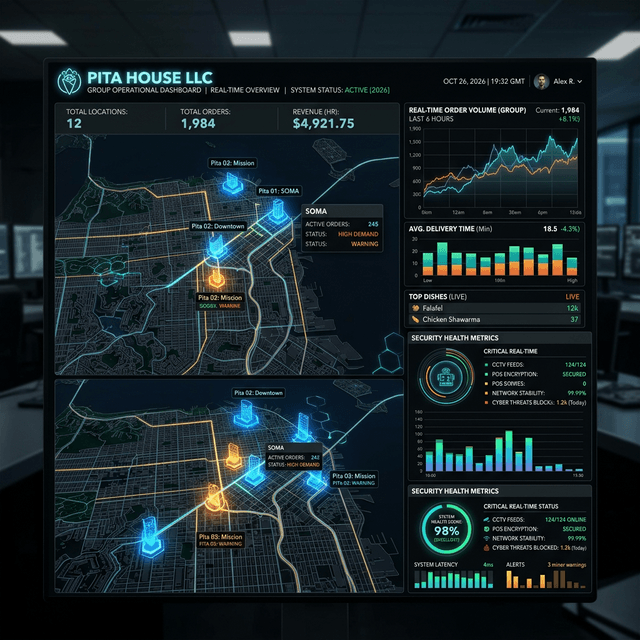
Pita House LLC: Building a Scalable Digital Infrastructure for Multi-Location Success

Composite Model: How an Ecommerce Ops Team Reclaims 87 Hours/Month With n8n
AI Automation & ROI
Replace manual workflows with agentic AI ecosystems that pay for themselves.

Ready?
Put AI to Work for You.
Call now and talk to Aria, our AI strategist, or book a free 30-minute assessment.
Aria picks up instantly · 24/7 · Free assessment · 30-day guarantee